Survey Number vs Gat Number: What Every Panvel Land Buyer Should Know
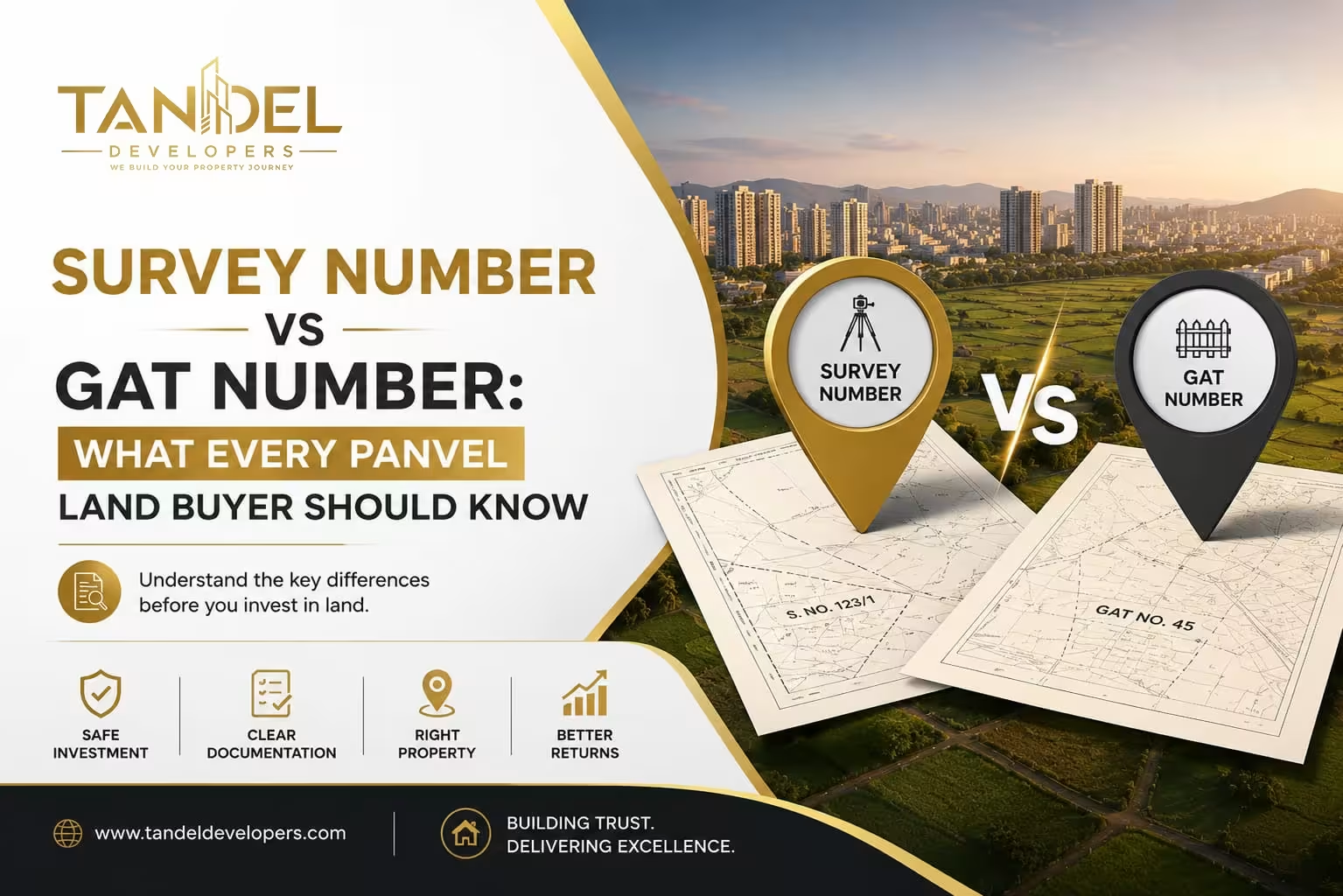
If you’re buying land in Panvel, you’ve probably seen both terms on the property papers. Survey vs gat number sounds like a small detail. It isn’t. These are two separate land ID systems in Maharashtra. Mix them up, and your purchase can slow down. It can even cause trouble later at the registrar’s office. This guide breaks down survey vs gat number in plain words. Survey vs gat number sounds like a small detail… This guide breaks down survey vs gat number in plain words
What Is a Survey Number in Maharashtra?
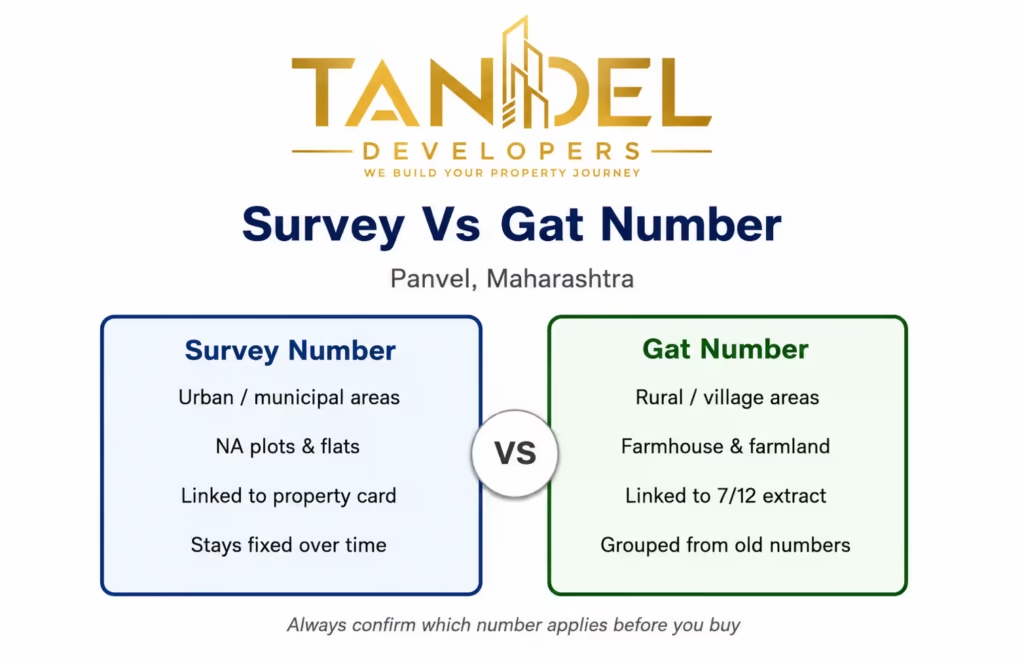
Maharashtra gives a survey number to land inside city or town survey areas. Every plot within a city limit gets one. This number stays fixed. It doesn’t change, even when the land changes hands or gets split.
You’ll usually find survey numbers on urban and semi-urban plots. For example, this includes NA residential plots. It also includes parts of Panvel inside Navi Mumbai’s planning zone. Instead, the number links to the property card. That card shows ownership, area, and plot boundary details.
What Is a Gat Number in Maharashtra?
A gat number is the rural version of a survey number. Instead, it identifies farm or non-urban land inside a village. You’ll find it on land records for farmhouse plots. You’ll also find it on agricultural land near Panvel.
Gat numbers came in after Maharashtra redid its rural land records. The state grouped small survey numbers into bigger blocks called gat. So, one gat can cover land that once had several survey numbers.
Survey Number vs Gat Number: What’s the Real Difference?
No, survey number and gat number are not the same. People often use them as if they mean the same thing. They don’t. Survey numbers apply to land inside city or town survey areas. Gat numbers apply to land in rural villages instead.
The survey vs gat number split exists…” and “…why the survey vs gat number question comes up so often here . Maharashtra’s rural and urban land records grew apart over time. So, a plot carries only one type of number, never both. It depends on whether the village is rural or urban.
This matters a lot in Panvel. The city has urban survey zones. It also has rural gat villages nearby. So, two plots just a few kilometres apart can use different number systems. That’s why the survey vs gat number question comes up so often here.
How Banks and Registrars Use the Survey Number vs Gat Number
Getting this wrong is not just a small slip. Banks check the survey or gat number first. Then, they approve a home loan against the property. Registrar offices need the right number to register your sale deed. If you want to convert farmland to residential use, the process starts with the gat number, not a survey number.
This is why survey vs gat number matters so much . Buyers sometimes think both terms mean the same plot ID. So, they skip checking which one applies. That creates delays at registration. In a few cases, a broker had quoted a number that didn’t match Revenue Department records at all.
Our property verification and investment consultation services catch this kind of mismatch early, before you pay a token amount. That one check can save you weeks of trouble later.
How to Check Survey Number vs Gat Number Online
Maharashtra put its land records online. So, you don’t need to visit a Talathi office just to check a number. Checking survey number vs gat number online takes only a few minutes.
First, go to the official Mahabhulekh portal. Pick your revenue division; Panvel falls under the Konkan division. Next, choose the district, taluka, and village from the drop-down menus. Then, enter the survey number or gat number. You can also search by the owner’s name. Your 7/12 extract will show up on screen. You can download it and check it against what the seller gave you.
This basic, unsigned copy costs nothing. However, a bank or court may ask for a signed copy instead. In that case, the Aaple Sarkar portal offers one for a small fee.
Common Mistakes With Survey Number vs Gat Number
Most survey vs gat number mistakes happen for one simple reason, trusting a number a broker gives you out loud, without checking the actual 7/12 extract. A close second is assuming two nearby plots share the same gat or survey number. In fact, one gat can split into many sub-plots, each with a different owner’s share.
Most survey vs gat number mistakes happen for one simple reason. Buyers skip this one check. Buyers also mix up the two terms because both just look like a plain number on paper. So, ask the seller directly which type of number it is. Also ask which village it falls under. That one question clears up the confusion early.
If you’d rather not do this yourself, our team can verify it for you before you commit to anything.
Buying Land in Panvel: Your Survey Number vs Gat Number Checklist
Knowing the survey vs gat number difference is just one part…” and “…Let us verify survey vs gat number for you. That checklist also covers clear title checks, mutation records, and NA approval status. Tandel Developers builds this kind of care into every listing across Panvel. So, buyers don’t have to chase down land records on their own.
Are you looking at a plot right now? You can browse verified listings in Panvel, including NA residential plots and farmhouse plots. These suit both end users and investors. Agricultural land near the city is also available for a longer-term buy. Managing this from abroad? Our NRI buyer support team handles document checks and site visits for you.
Whichever type of land you’re buying, get the exact number confirmed in writing first. Then, check it yourself on the Mahabhulekh portal before signing anything. Or better yet, get in touch with our team. Let us verify survey number vs gat number for you. It takes ten minutes, and it can save you months of trouble later.
Survey vs Gat Number: Are They the Same? (FAQ)
Survey Number vs Gat Number: Are They the Same?
No, survey number and gat number are not the same. Survey number applies to land inside city or town survey areas. Gat number applies to farm or rural land in a village instead. A single property carries only one of the two. It depends on whether the village is rural or urban.
What is a survey number?
A survey number is a unique number for a plot inside a city or town survey area. It stays fixed even after the land changes hands or gets split into smaller parts. The number links to the property card. That card lists ownership, area, and boundary details. You’ll typically see this on flats and NA residential plots in Panvel.
What is the gat number in Maharashtra?
It’s the ID number the state Revenue Department gives to a block of rural land in a village. It appears on the 7/12 extract. It also shows who owns the land and how it’s used today. Buyers looking at farmhouse plots or farmland near Panvel will find this number on their papers.
What is the difference between survey number and Patta number?
A Patta number is a land document used mainly in states like Tamil Nadu. Maharashtra doesn’t officially use it. Here, the closest match is the 7/12 extract. That extract ties to either a survey number or a gat number. So, always ask for the 7/12 extract instead when buying in Panvel.
Is survey number and property number the same?
No, these are usually different things. A property number, also called a house or municipal number, comes from the local municipal body. It’s used for tax and address purposes. A survey number comes from the Revenue Department instead. It identifies the land itself, not the building on it.
Is the survey number and house number the same?
No, these are two separate systems. The local municipal body or gram panchayat issues a house number for postal use. The state Revenue Department issues a survey number for the land itself. So, one survey number can even hold multiple house numbers.
Is survey number and assessment number the same?
No, the municipal body uses an assessment number for property tax in cities. A survey number identifies the land parcel under state revenue records instead. Your municipal body uses the assessment number for your yearly tax bill. Meanwhile, the survey number stays the reference point for ownership.
Can a survey number change?
A survey number usually stays fixed once assigned. However, it can split into smaller sub-numbers, called hissa numbers, when owners divide a plot. In rare cases, the Revenue Department may renumber plots during a formal resurvey. So, always check the latest 7/12 extract for the current, valid number.
Can we see survey numbers on Google Maps?
No, Google Maps doesn’t show official survey or gat numbers. These numbers exist only in Maharashtra’s official land record systems, mainly the Mahabhulekh portal. Some private map overlays claim to show survey boundaries. But they aren’t reliable for legal or purchase decisions.
Do I need both numbers to buy land in Panvel?
No. A plot carries either a survey number or a gat number, never both. What matters is confirming which one applies to your plot. Then, check it against the official 7/12 extract before you commit.